Innovations and Innovators: Sous-Vide

16-LEDE-chefsteps-joule-sous-vide-all-white.w700.h467.jpg
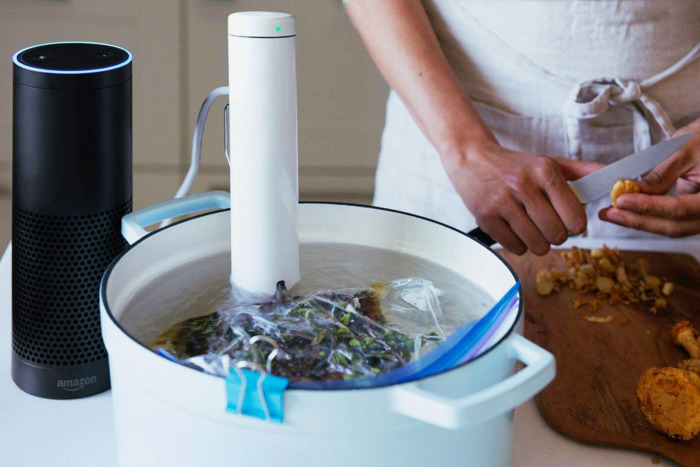
Photo by: ChefSteps

The innovation I have done my research on for this blog is the infamous Sous-Vide technology and technique used in almost all of the modern kitchen today. Sous-Vide is a method of cooking where a the cooking component is usually wrapped and seal in a plastic pouch and slowly cooked in low moderate temperature water bath. The temperature of the water is lower than usual cooking temp, therefore it takes longer than usual to cook the ingredients but comes out with better results and cooking results.  This new technology water bath helps cook ingredients much more evenly at a slower rate, having less to no chance of overcooking and also retaining moisture of the cooked ingredient.

This Sous-Vide innovation falls into the category of Technology and Process. The Sous-Vide method has been first brought up in the late 1700s. In the 1900s is when the Sous-Vide method started taking its place in the cuisine, being improved by many generations of chefs, through different cooking methods, trying to find the best way to Sous-Vide an ingredient. As of today, Sous-Vide is at its most compatible form, with chefs being able to experiment a wide-range of different cooking methods, ingredients and theory into the Sous-Vide cooking method. This shows how the technology and innovation of the Sous-Vide cooking method has evolved drastically over the few hundreds of years. This technology has also helped with the process of cooking ingredients in a busy high-end restaurants, by cooking ingredients to perfection and not losing as much yield as they would using a different method. This has helped many restaurants save money and valuable time, giving them space to do other important jobs and create new things.
maxresdefault
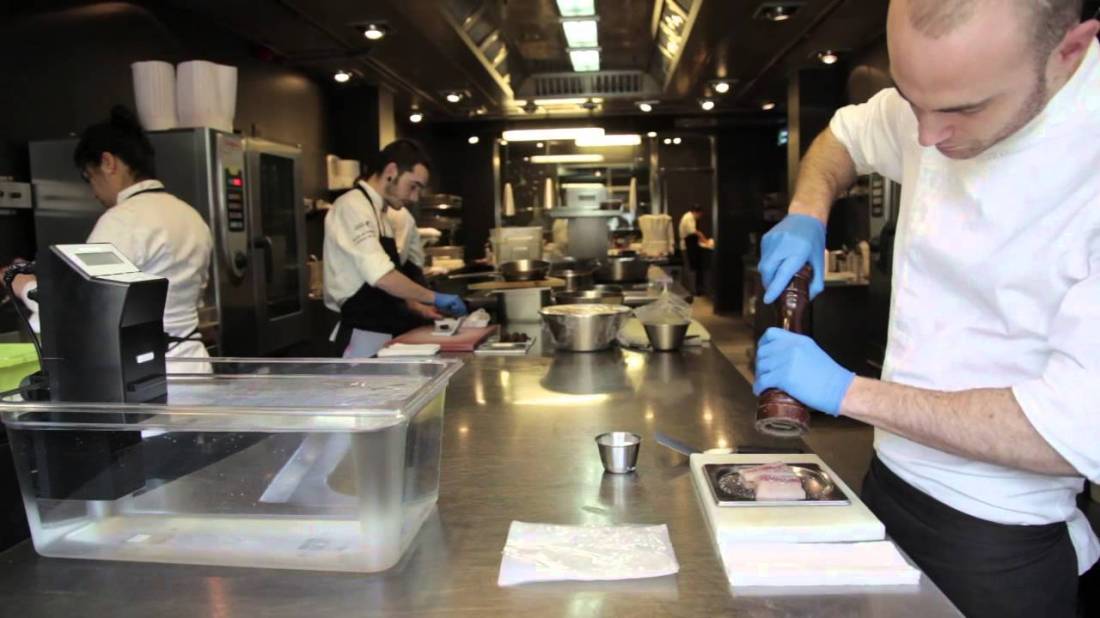
Photo From: Youtube,  Channel: 100% Chef, Video: NOON – SOUS VIDE COOKING. Demo Abac Restaurant

The reason being the Sous-Vide method and technology is such an important technique in today’s culinary world is convenience. Now, chefs and cooks are able to cook ingredients to the perfect temperature and texture that they desire to put on their dish. It has a lot of benefits rather than negative. Helps with the yield and size of the product they use, being able to save money while also creating the perfect result. This technology has helped and improved our culinary scene through fine dining, where chefs are able to experiment and create new cooking methods and dishes that are innovative and influential, making the Sous-Vide one of the most greatest culinary inventions of this time.
estilo-gourmet-jordi-roca-hermanos-roca-celler-arroz-xlsemanal-1.jpg
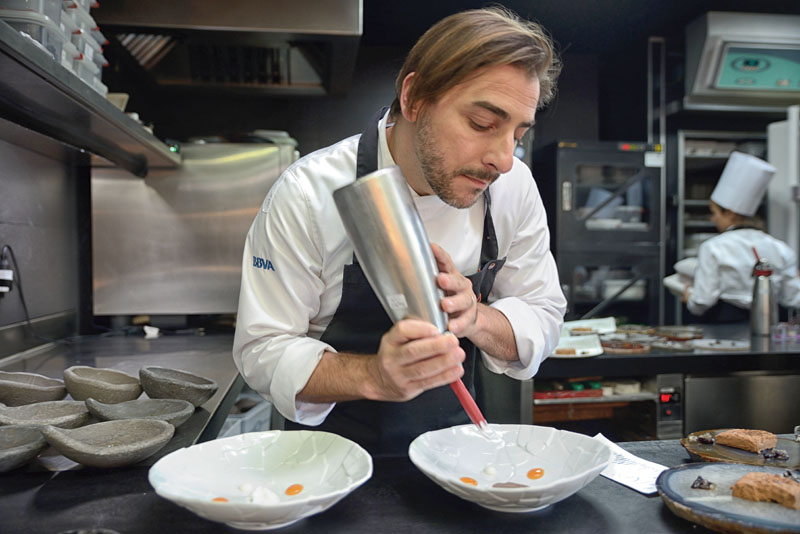
Photo by: Daniel Méndez, Pastry Chef Jordi Roca (three Michelin star restaurant pastry chef, Jordi Roca is one of the few people I admire who uses sous-vide to create world-known desserts)

This whole technique and innovation has really influenced me a lot, not directly but in some ways. Looking a dishes made by Michelin star chefs and influential chefs, where its visually attractive and also flavorful, many of these dishes that have influenced me to pursue a job in the culinary industry has been made using the Sous-Vide technique. Like how the Troigros brothers changed the culinary scene by making their infamous dish “Salmon & Sorrel” (by using a new technique of no overcooking the fish), sous-vide has that type of influence and has changed the culinary scene as we see it today. The science and ways of this technique has always fascinated me ever since I took interest in the culinary and food scene.

 

Diets and Dietary Restriction Blog

THE DIET I CHOSE FOR THE WEEK

The specific diet I chose for the past week was the Keto Diet. To give a brief explanation of what the Keto Diet is, it is a low carb, high fat diet that has many health benefits to the body. Very similar to the Atkins diet and low carbs diets, the Keto diet basically lowers the carb consumption in your body drastically while replacing it with more fat consumption. The reason why I took this specific diet as my diet for the week was because I wanted to experience what it felt like having and carb but high-fat diet for a whole week. Growing up in family rich with Korean cuisine, carbs were always a part of our everyday meal. Also just pasta and noodles were the things I loved most. Therefore though this blog project I tried to put myself in a place where I restricted and took out most of the carbs from my diet  and replace them with high-fat content food and ingredients.

THE ALLERGEN

The allergen I chose to include in this diet was wheat as it seemed perfect and fit right into the diet I chose to follow. As wheat is considered a big carb ingredient, following the Keto diet takes away the worries of consuming any sort of wheat that can have a bad effect on the body, replacing those missing nutrition with different ingredients and food.

ONE RECIPE I MADE 

For most of the part, i researched a bunch of diets and examples of diets recommended by experts posted online. But after looking though ingredients and foods that can be consumed for this diet, I came up with one dish that really satisfied my palette and my physical and mental state in a positive way. The dish I made for this diet was a Cheddar Cheese Omelet with Avocado Salad.

Cheddar Cheese Omelet:

  • 3 Large Grade A eggs
  • Salt and Pepper
  • 30g Grated Cheddar Cheese

Avocado Salad

  • 1 Whole Avocado
  • 1 tbsp dried raisins
  • 1/2 pc Orange Bell Peppers
  • 1 tbsp Almonds, chopped
  • 1 pc Green Scallion, chopped

    IMG_0599 (1)
    Avocado Salad


7 DAY DIET LOG SHEET 

Day 1:

  • Breakfast: Cheddar Cheese Omelette with Avocado Salad and Black Coffee
  • Lunch: Pan-Seared Chicken Breast Salad with Olive oil and feta cheese
  • Dinner: Pan seared Salmon with lemon zest and grilled asparagus

Day 2:

  • Breakfast: Bacon, Scrambled Eggs with pan seared tomatoes
  • Lunch: Beef stir fry cooked in olive oil and bell peppers
  • Dinner: Pan-seared pork chop with steamed broccoli

Day 3:

  • Breakfast: Sugar-free Greek yogurt mixed with Brazil nuts and dried raisin
  • Lunch: Leftover Guacamole Salad
  • Dinner: Pan-seared chicken breast with roasted bell peppers

Day 4:

  • Breakfast: Milkshake (recipe from http://cookingispun.com/author/Kelsey/)
  • Lunch: Omelette with saute bell peppers and onions
  • Dinner: Pan-seared trout with Beurre Blanc and asparagus (menu comes from the CULINARY CONCEPT MANUAL)

Day 5:

  • Breakfast: Scrambled Eggs with Canadian Cornmeal Bacon and tomatoes
  • Lunch: Avocado Salad with Brazil nuts and celery
  • Dinner: Steak with blanched butter-saute spinach and steamed broccoli

Day 6:

  • Breakfast: Milkshake (recipe from http://cookingispun.com/author/Kelsey/)
  • Lunch: Hard boiled eggs and spoonful of peanut butter
  • Dinner: Leftover steak with saute mushrooms and steamed broccoli

Day 7:

  • Breakfast: Ham and cheese eggs with free-sugar yogurt
  • Lunch: Almond milk, peanut butter, blackberries
  • Dinner: Pan-seared salmon and grilled asparagus


REFLECTION ON DIET EXPERIENCE

When I first started planning for this diet, I was very excited to start it soon but also a little worried that I wouldn’t be able to go through with it for a full week. The first three days of the diet was very exciting. I was able to cook all the food I needed to eat throughout the day, giving me something exciting to do three times a day. The food tasted very good and matched with my palette. I felt a lot of energy and felt good about myself and my body. This really boosted me to go to the gym and exercise and workout harder than before. It gave me more energy to push myself to my limit of my workout. As Thursday and Friday came, I was very tempted and craved sugary sweet junk food and snacks. Thankfully I was able to restrain myself to eating these products. Eating so much eggs for a full week made me really tired and annoyed of that ingredient, so I changed it up a bit by putting in milkshakes and yogurts, which helped me a lot.

Honestly this diet really helped me feel better mentally and physically. When waking up early in the morning, I felt much more energetic and alive than I used to before doing this diet. As the day go by, I would usually feel very tired and unmotivated to do activities and work, but after taking this diet for a good 4-5 days, I started feeling much more energetic and better throughout the whole day, with my mood and attitude being positive and looking at things I regularly see in a different perspective. everything felt much more clearer and fresh. I think that was the most important lesson I learned through this diet. It is that what you eat will produce the human you will be. Eating healthy and nutritional food has its benefits and its important to eat healthy so that not only the body, but also the mindset is much more positive, which helped me get things done throughout the week.

MY VIEWS IN COOKING AND MAINTAINING THE DIET

Through this diet, I realized that so many food can be created without the deliciousness that carbohydrate provides to a dish and meal. Through research, it also opened my ind to different ways of substituting carbs with a different element of food, which can also increases its flavor or maintain it the same way a type of carbohydrate would.

As for maintaining this diet, I believe I would be able to do so since it had such a positive affect on my body and mind. The only problem might be setting up a diet that I can use for long term and also not having the time to cook all these meals for myself every day and week. Other than that, this project has really opened my eyes to why healthy food is healthy and different ways of cooking food. The keto diet is something I can follow throughout my whole life if I really put in the focus and dedication to do so.

“Hug a Farmer” BLOG

095-copy.jpg
Photo by: York Farmers Market

The farmer I was able to meet was a man called Stuart Carroll, a butcher and animal farmer who ones the Stuart Carroll’s Quality Meat store at York Farmers Market, a market near my area. Ever since his father had a butchery business back in the day, Stuart Carroll started working part time in the butchery field since he was 11 years old. Fascinated by his fathers business, Mr Carroll took up his father’s business when he got older and made it to what it is today. Selling great local products in a healthy way.

Stuart Carroll took up this job thanks to his father who was a butcher himself at the same location long time ago. Seeing his father run a butchery store, selling meat and meeting regular and new local customers on daily basis really made him happy and motivated him to follow his father’s footsteps. His love for animals really helped him have a special connection and relation between animals and farming. It is a weird job, for him to have to take care of animals he needs to kill for business, but Stuart Carroll learned a lot through his father and years of experience, letting him have a special and unique relationship between the animals he is raising and his butchery business.

counter2
Photo by: Stuart Carroll On-Line

The stores philosophy remains the same as it was before. Being able to serve the finest quality of meat and service, while keeping true to a safe and healthy agricultural system and teachings. Rather than price and quantity, they care more about where there products are grown and processed and how healthy it is for the human health and the environment. This is something that many people nowadays are looking for and Stuart Carroll’s butcher store can provide that.

Something hard he faces a lot is running his business. Though it is a local favorite for many people, Stuart Carroll wants to open his business and expand more to teach others to consume locally, healthy, Eco-friendly raised beef, rather than those sold at supermarkets. He really wants to educate others about the way agriculture is done today. he wants to bring back those moments where majority of people bought good quality beef from butcher stores, helping each together and also the community. He talked about how businesses and people should help each other which is what he does, buying and selling products from family farms in Ontario who really care about their job and want the best for the environment and the community.

From this interview with Stuart Carroll, I was able to see a new point of view on the subject of agriculture and farming. Being able to meet a farmer opened my eyes on how important it is to help local farmers and buy products that are natural, healthy and Eco-friendly. I realized that supporting these local farmers will not only help out the local community but most importantly, help improve the Earth’s ecosystem and environment. What we buy and consume is gonna bring the result of the Earth’s health and well-being.


Purchasing Meat and Game: Pork Belly

nature animals pig alp rona
Photo by Pixabay on Pexels.com

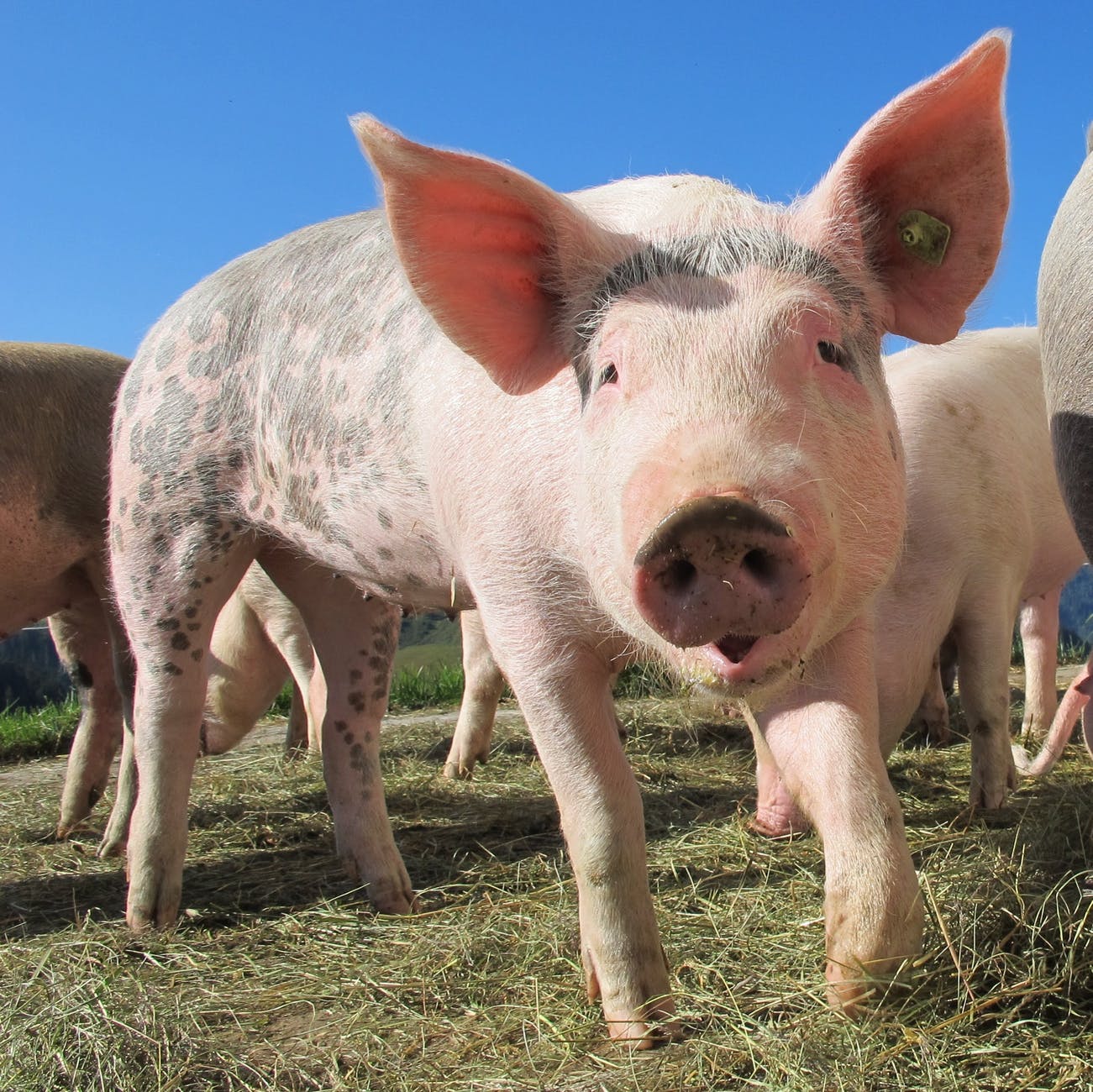
The animal that I have chosen for this blog is the pig. This animal has always had a big part and inspiration to my goal in pursuing my culinary goals. Ever since I was a kid,  pork has been a staple food for me and my family. Whenever there were special events and family gathering, there would always be a pork dish that i always looked forward to. The pig has always been one of my favorite type of meat, even better than beef. It is an animal that has a special influence to me growing up as a kid.

The pig is an animal that has been domesticated for thousands of years. It has always been a farm animal, used for many purposes but mostly for consumption. The pig has always been famous for its delicate, soft and fatty meat, being an affordable meat. Every country has their own distinct way of making pork dishes. The US is famous for whole-hog barbecue, whereas across the world in China, Char Siu pork is an iconic dish. Pork has always been a staple meat in every culture and country over the past thousands of years.

pork-chart-31
Photo from slowdownandsavorblog.com

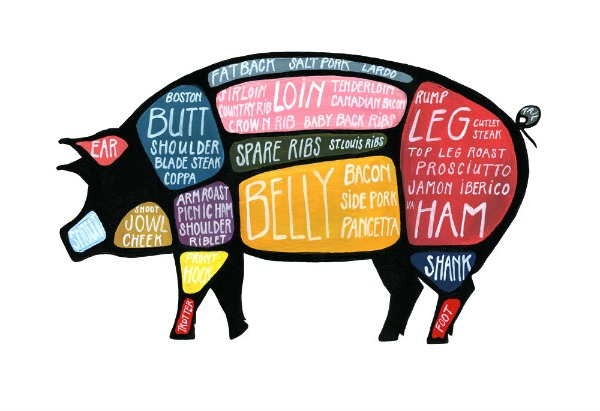
A well-known underrated part of the pig is the shoulder butt. With a good portion and quantity of lean meat and fat, I believe that the shoulder butt of the pork is a very good cut of meat. Here in Canada, the pork shoulder butt prices at around $2.35/pound.  The shoulder butt, also known as the Boston Butt, is located on the top shoulder part of the pig. In America, pork shoulder is famously used for pulled pork, a staple Southern barbecue. As a kid growing up, the shoulder butt was and still is one of my part of any animal. Growing up in a Korean family, the shoulder butt was used for many dishes. A few well known Korean dishes that uses the pork shoulder are Spicy Pork Bulgogi and Korean Barbecue.

The one cooking method I would choose while using this part of the pig is through marinating the thinly slices of pork shoulder and then cooking them on the grill or fry pan. The Spicy Pork Bulgogi is a dish that uses all these methods and technique. The recipe I will be showing today is something my mother and grandmother have been using ever since and is commonly the same recipe all over Korea.

Rporkbulgoki
Photo by BCD TOFU HOUSE

RECIPE

Dry Ingrediants

  • 500g Sliced pork shoulder butt
  • 1pc White Onion, thinly sliced. julienne
  • 2 stalk Green Onion/Scallion, thinly sliced
  • 1pc Hot pepper, thinly sliced
  • 1pc Carrot , julienne

Marinate (Wet Ingredients)

  • 1.5 tbsp Gochujang
  • 2.5 tbsp Dried Chilli Powder
  • 1 tbsp Soy Sauce
  • 1 tbsp Korean Rice Wine
  • 1 tbsp Minced Garlic
  • 1 tbsp Sesame Oil
  • 2 tbsp Sugar

INSTRUCTIONS

  1. Mix all the we ingredients together until wet, silky paste is created.
  2. In a large bowl, add both sliced pork shoulder butt and marinate together until fully incorporated. Set in teh fridge for a day before cooking. (This allows the flavour of the marinate sauce to go through the meat.)
  3. Set a pan in med high heat with cooking oil. Put in the marinated pork shoulder butt and cook until a dark crust is created.
  4. Add in the carrot and cook together for a short period of time to release the flavour of the carrot
  5. Add in the Onions and the Chilli pepper and cook until they are translucent and cooked
  6. Set on a plate and add green scallion on top with sesame seed for garnish.
  7. Serve

This meal is best served with hot white rice, as it will balance out the hot spicy flavor with a plain taste of the rice. Spicy Pork Bulgogi is a staple dish for Korean people and it is well known in North America. This dish has a special place in my food memories and I wish I can create a dish inspired by this one and be able to put it up in my menu in the future.

Plant-Based Diet vs Animal-Based Diet

WHAT IS THE DEFINITION OF A PLANT-BASED DIET?

A whole-food, plant based diet is focused on unrefined, whole plants and products. . It is a diet based on fruits, vegetables, legumes, and whole grains. There is little or no animal based products consumed in this specific diet, and excludes any refined products like added sugars, white flour, and processed oil. The whole diet is surrounded by the idea of using local and fresh produces and gives dieters a better attention towards food quality and quality of ingredients.

This diet is very similar to between a vegan and vegetarian diet. The flexibility of the diet allows consumers to choose from a wide range of food categories. People are suppose to eat mostly plant, but they are also allowed to include small amounts of animal products (including meat).

3 HEALTH BENEFITS AND MORAL/ETHNIC VALUES

Through a plant-based diet, it can reduce consumers risk of getting heart disease. Though this diet is well known to to be “heart-healthy”, it is important to use good quality produces for the benefit to come. Thanks to the healthy vitamin and nutrients included in most plant-based diets, consumers have a significantly lower risk of developing heart disease than someone who follows a on plant-based diet. Refined sugar and grains are factors that increase the risk of heart diseases, which plant-based dieters do not consume.

This diet also helps reduce the risk of developing diabetes. It is proven that plant based diets helps improve the blood sugar level in the human body. In a study more than 200,000 people who followed this diet had 34% lower chance of developing diabetes than those who eat unhealthy, non plant-based diets.

The plant-based diet can also help people maintain and lose weight. This diet is one of the key components when it comes to losing weight. The high fiber content of this type of diet, with the reduction of processed food, helps decrease and eliminate any excess fat and pounds. Not only does it help with weight loss, but it also helps with maintaining it on the long run. With a strict no processed food policy in this diet, it is weight loss helper.

Following this diet not only helps improve your own body, but the environment and world we live in today. With a regular diet based on plants, it helps reduce the carbon footprint human leaves on earth. With less consumption of meat, it helps lower the agriculture/farming of live animals who produces a lot of carbon, especially cows. Adopting this diet can also help reduce greenhouse gas emission, water consumption and usage, which all contribute to the global warming our planet faces today. Also, by buying local ingredients and produces helps the local economy and farms thrive and reduces the reliance most of  have on factoring farming, which is a big contributor to waste and gas emission.

CAN YOU SEE YOURSELF INCORPORATING PLANT-BASED FOODS IN YOUR MENUS?

The answer simple. Yes I do. People are now more aware of their health and of what they eat. They want fresh produces with the healthiest and flavorful dish. I myself like vegetables but only cooked in a certain way, such as grilling. Many people think of refreshment and cleanness when it comes to plants and vegetable. I want to create dishes that give the maximum flavor of the plant product but also taste good and palatable even to a meat eater like myself. I want my restaurant to have a diversity of different vegetables made in a Korean style that is healthy and tastes delicious.

PERSONAL DISH CREATED

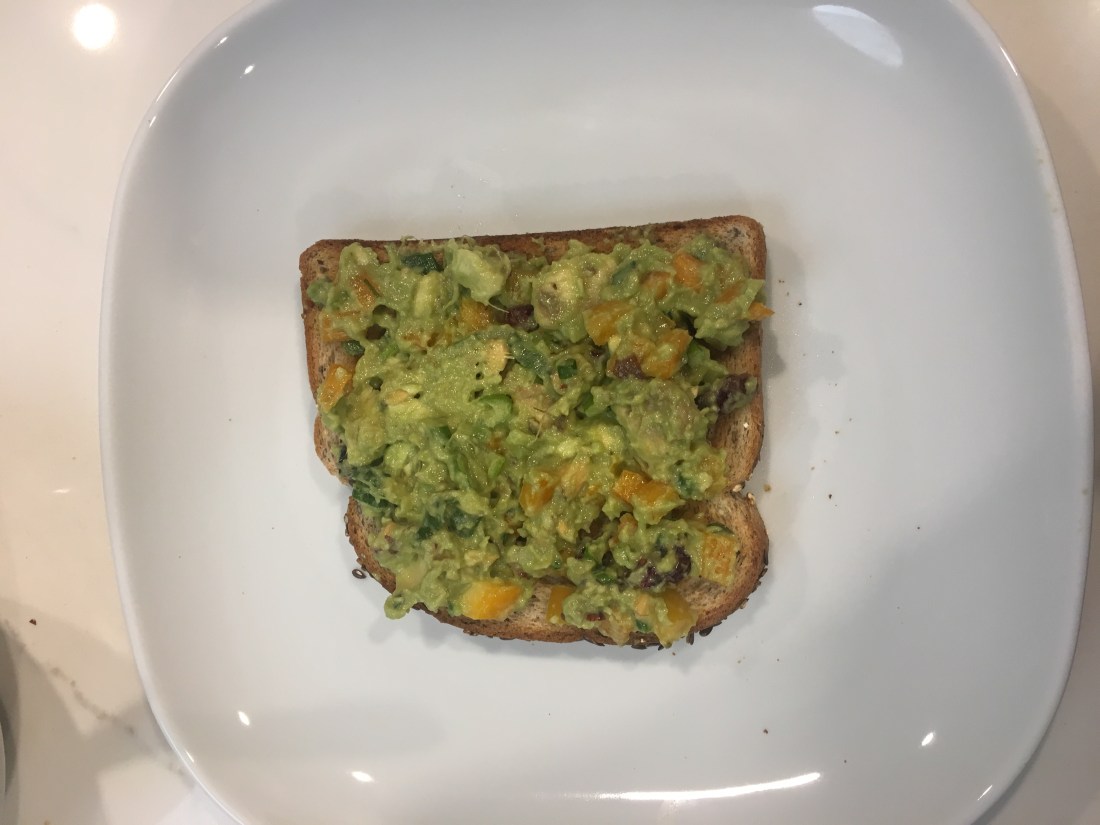
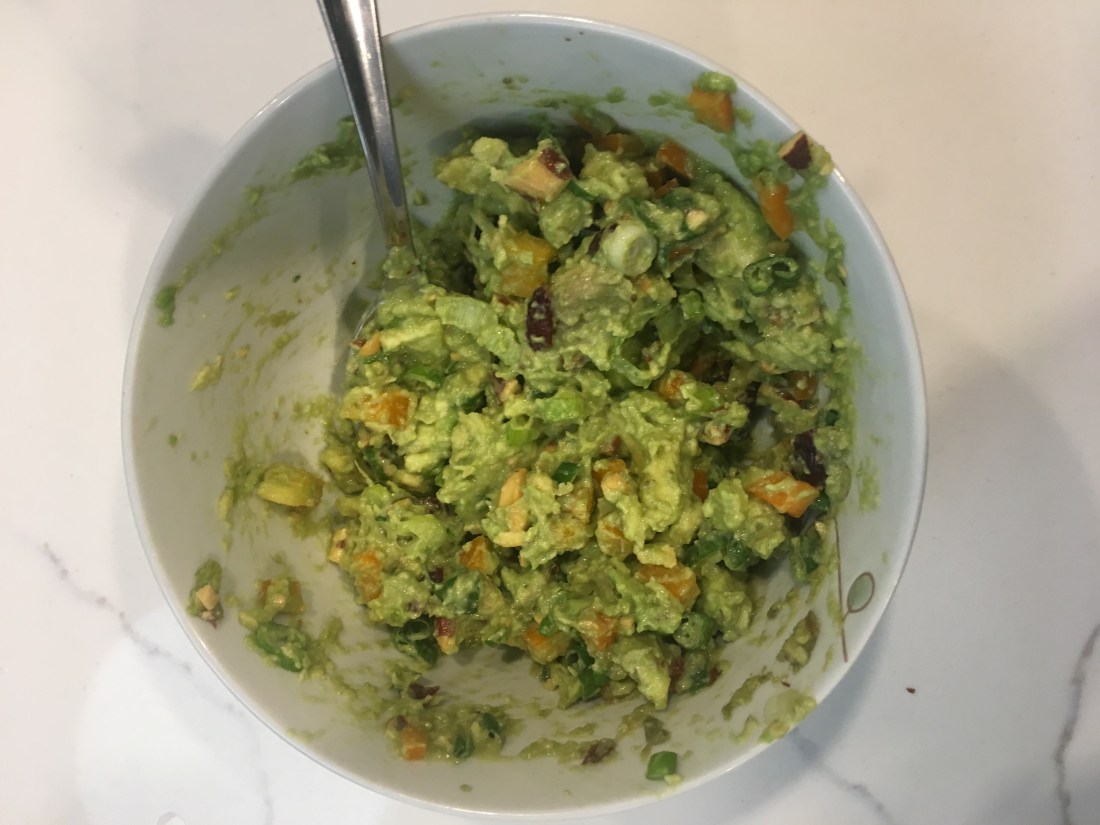
Today I made a simple guacamole avocado toast. I feel like this dish is somethin anyone can eat woth ease. With such rich flavour, healthy and clean ingrediants, the avocado toast is a good meal that shold be included in everyones plant-based diet.

RECIPE

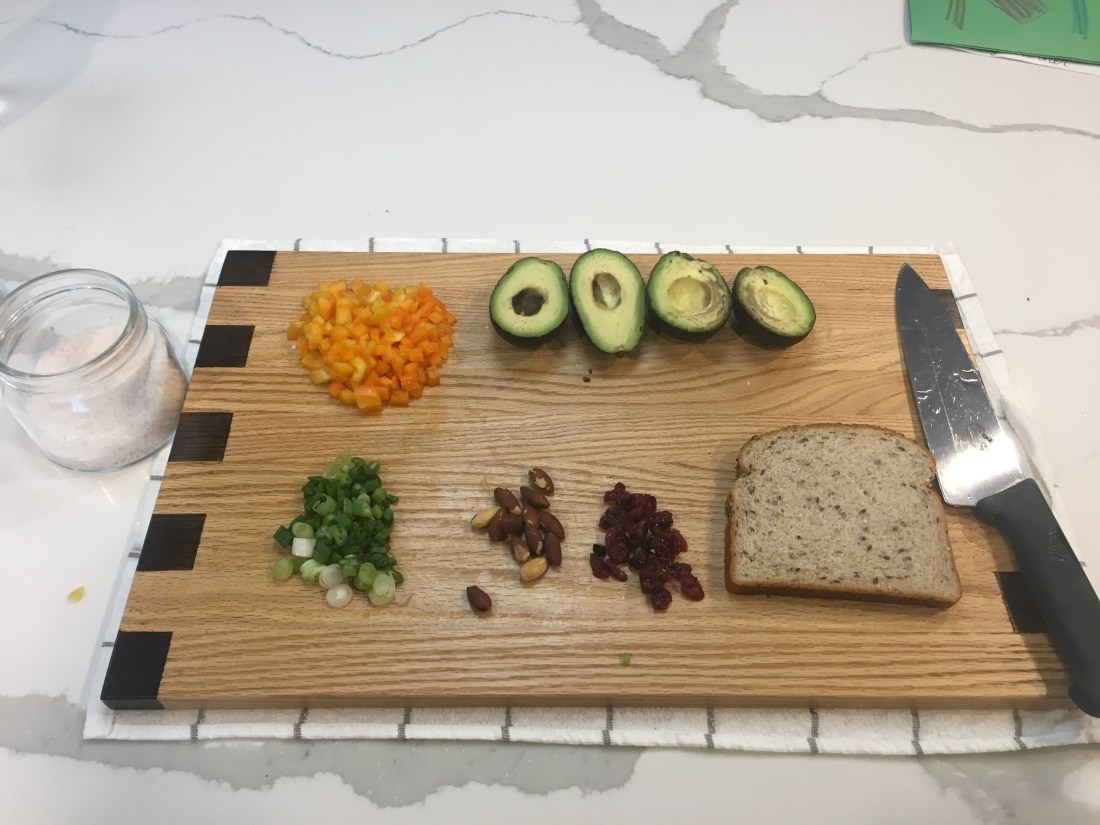
2 ripe avocados

1 green onion, sliced into little pieces

1 yellow bell pepper, chopped into brunoise

10g dried almond, roughly chopped

5g dried cranberry

1/2 teaspoon of kosher salt

1 tablespoon of fresh lime or lemon juice

1 slice of whole wheat bread

IMG_0597

METHOD

  • Take out the seed from the avocado by cutting in half and use the bottom of your knife and twist it out
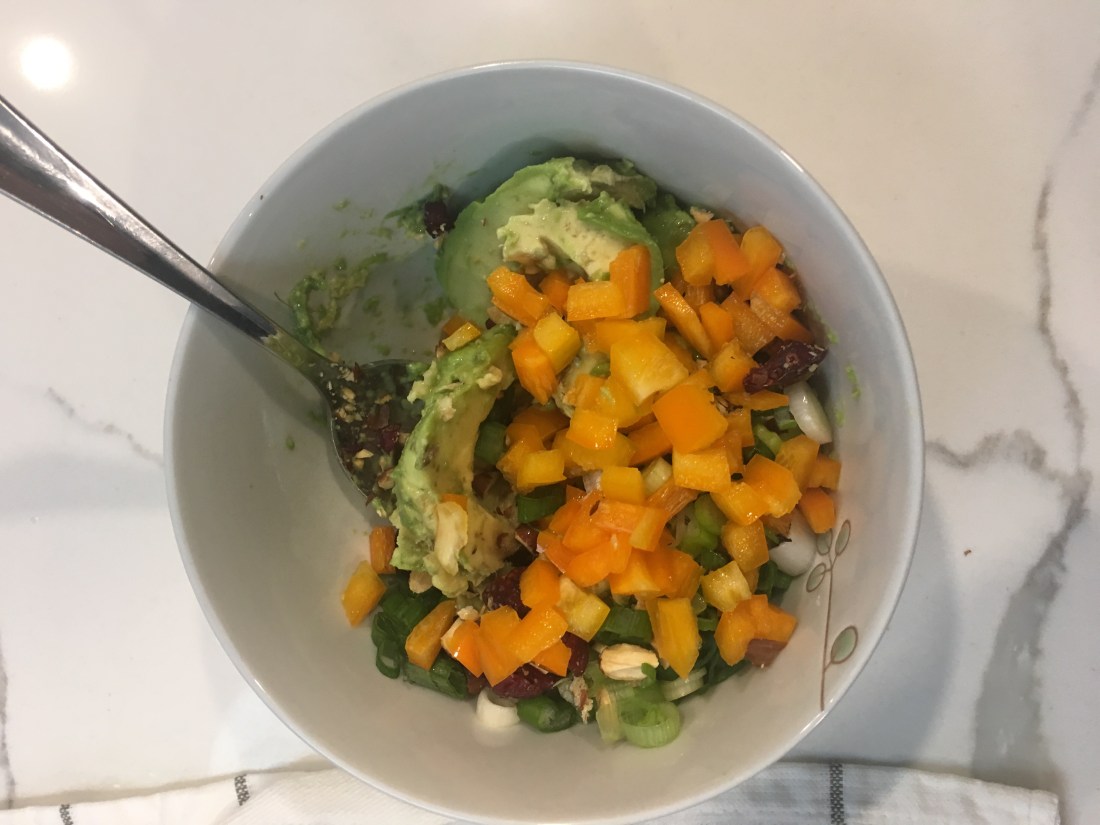
  • Add the avocado without the skin in a bowl and add all the ingredients shown above. Mix together until fully incorporated into a chunky avocado paste

IMG_0598IMG_0599 (1)IMG_0600

  • Toast bread in toaster for around 3 mins for a crunchy, golden crust
  • Add a generous amount of guacamole on top of the bread and spread evenly
  • Serve!

PERSONAL EXPERIENCE

Making this dish was very easy. As someone who is trying to use only raw and non-processed ingredients, I feel like i did really well. Though I am mostly used to cooking food that has been processed either through the oven or a pan, it was a good experience being able to handle fresh food just as it is. Making up a recipe was kind of hard, because I wanted the guacamole to have color, crunchy texture and a little bit of sweet taste and I think I have achieved my goal. I wanted to make a “cooking-friendly” dish, something easy to make for those who are struggling in the kitchen but want to make healthy food for themselves. Next time, I might add a little bit of hot chili to add some kick and intense flavor to it and some extra virgin olive oil to give it a better mouthfeel and texture.

Fermentation Project: Kimchi

DSC_1843-e1477360668451
Photo By: koreanbapsang

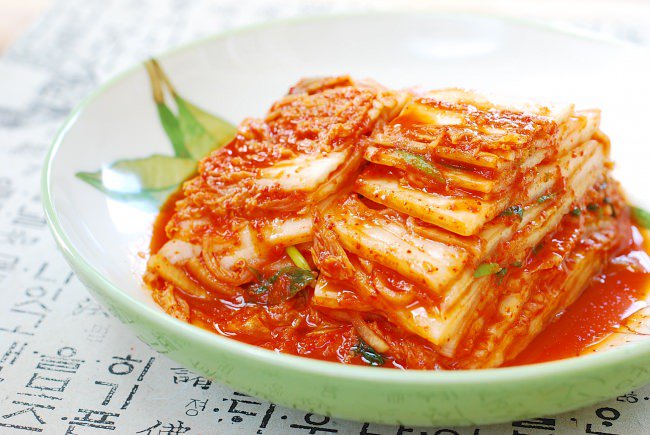
Kimchi is a staple and world famous side dish of Korea. This fermented cabbage dish is commonly consumed as a side dish to the main meal. It is a dish made of seasoned vegetables, Korean chili powder and salt and a variety of different style of kimchi exist in Korea. In the past, kimchi used to be stored underground in jars to keep cool and prevent it from rotten from warm temperature.  But nowadays, with the influence of technology, people use kimchi refrigerator designated for preserving kimchi. Thanks to its long period of durability, kimchi is eaten throughout the whole year almost everyday. Kimchi is contains a high concentrations of dietary fiber and is rich in Vitamin C, Vitamin A, calcium and iron.

Kimchi is also a very versatile ingredient and it contributes to many Korean dishes. Kimchi can be used to make Kimchi Mandu (Kimchi Dumpling), Kimchi Bokkeumbap (Kimchi Fried Rice), Kimchi Jjigae (Kimchi Stew) and Kimchi Buchimgae (Kimchi Pancake).

The raw vegetable that I am using for this specific kimchi is napa cabbage and radish. It is a very simple kimchi that only contains a few ingredients and a short amount of time to make.

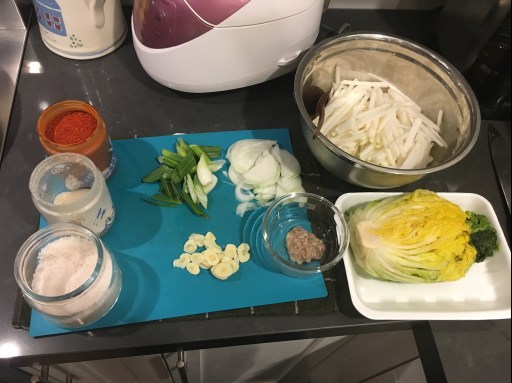
RECIPE

  • Half of a napa cabbage
  • Half a Daikon Chinese radish (thinly sliced, rough cut of julienne)
  • Half of a white onion
  • 2 green onions, rough cut
  • 2 cloves of garlic, roughly chopped
  • Pickled shrimp paste (half a tablespoon)
  • Korean Dried Chili Powder (half a cup)
  • Salt and sugar to taste

img_0586.jpg

PROCESS

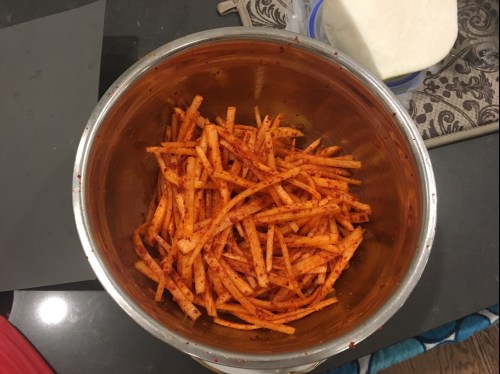
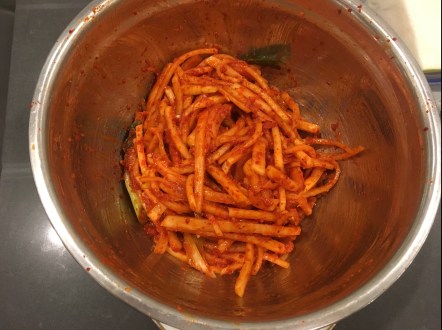
Step 1 Add Dried Chili Powder, thinly sliced radish, and salt altogether in a bowl and mix thoroughly. Set aside and rest of 10-15 mins

image_123923953.jpg
Step 1

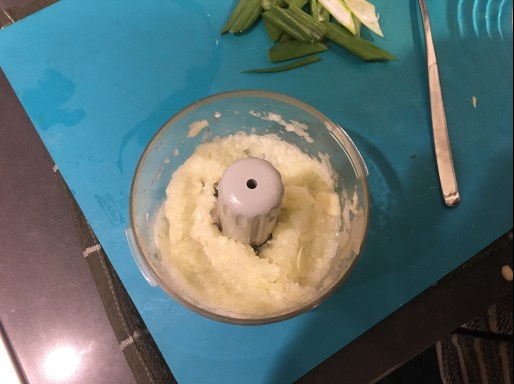
Step 2 Process garlic and onion through a mixer until it turns into a paste (2 tsp)

image_123923953-2.jpg
Step 2

Step 2 Put onion and garlic paste into the salted chili pepper radishes

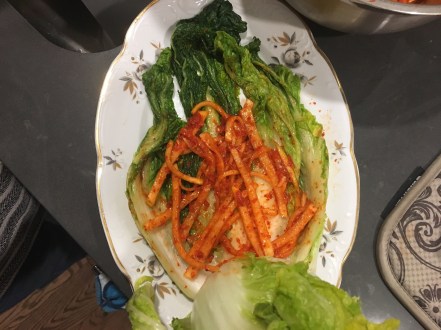
Step 3 Add pickled shrimp (1/2 tbsp), sliced green onions, and sugar (1/2 tbsp) into bowl and mix thoroughly and altogether

image_123923953-1.jpg
Step 3

Step 4 Add the marinated radish mixture in between each layers of the cabbage until the end.

image_6483441.JPG
Step 4

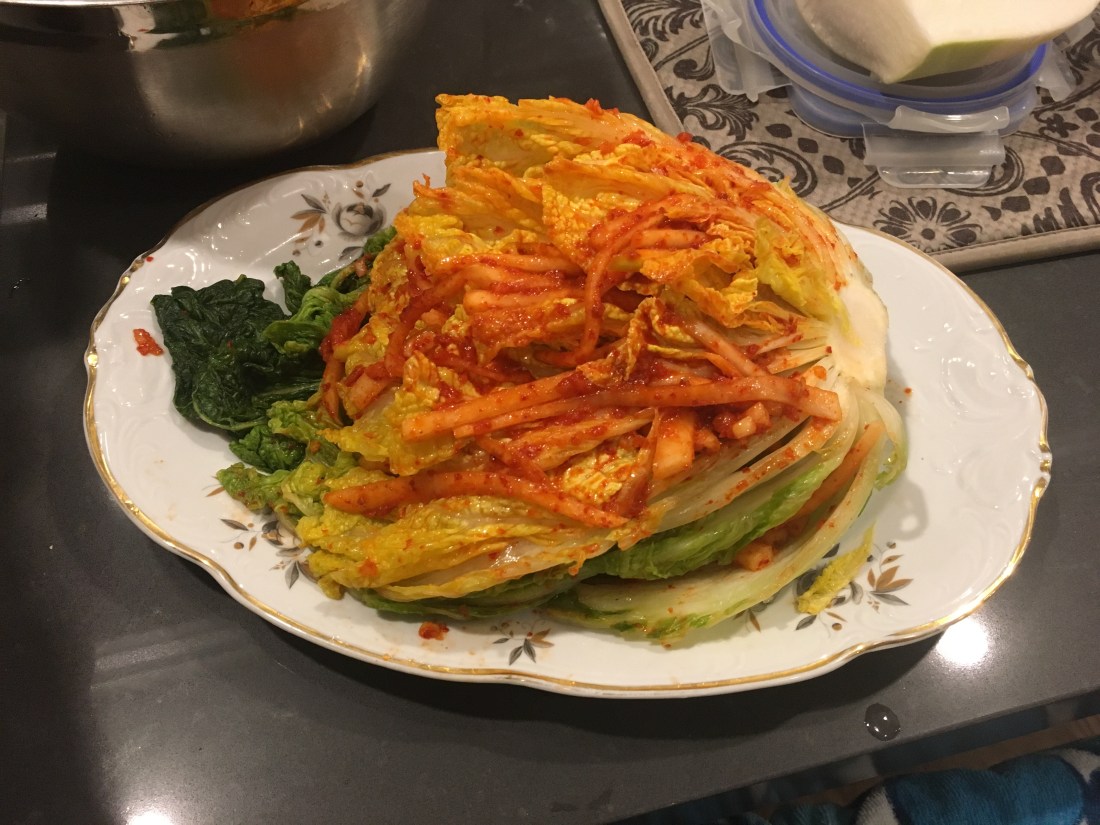
If there are any leftover of marinated radish, you can place it on top of the finished product to help the fermentation and marinating process.

image_6483441.JPG
Final Product before fermentation & preservation

Step 5 Place the marinated napa cabbage into a container. Put a plastic wrap on top and closed the container with a lid.

Step 6 Remember to leave the marinated cabbage in room temperature for 24 hours

Step 7 Then store marinated cabbage in a refrigerator for 2-3 days before serving. The longer you store the kimchi, the more intense and acidic the flavors and kimchi become.


PERSONAL EXPERIENCE

As for marking the kimchi, it was fairly easy for me because I would always help my grand mother and mother make kimchi ever since I was young. One thing I had difficulty with was the seasoning. With all the salt coming from the salt and the pickled shrimp paste, I had to carefully measure the amount of salt content needed for half a napa cabbage. Placing the marinated radish paste in between each layers of napa cabbage was a little difficult because I wanted to store as much as possible while keeping the natural shape of the napa cabbage. Other than that, it was very simple and easy prepping the ingredients and making the kimchi

TASTING

After leaving the final product at room temperature for 24 hours, I still tasted the raw flavors of the cabbage and the marinated radish paste. The flavor of each individual ingredient was very clear and it felt clean. The paste was a little overwhelming since it the 24 hour rest. After a few days of leaving the kimchi in the refrigerator, the appearance of the kimchi was similar to the beginning and the flavor changed a little bit. The color of the cabbage was starting to turn from white to a darker shade, turning into a translucent color. The cabbage had more acidity to it and the marinade seems to start seeping into the napa cabbage.

As someone who eats kimchi on a regular basis, I know how much the flavor and color changes as it go through the fermentation and preservation process. The longer you preserve, the more intense the flavor becomes, with a little bit of a tangy taste and high acidity level. The color of the cabbage becomes more dark and translucent.

Personal Sensory Evaluation

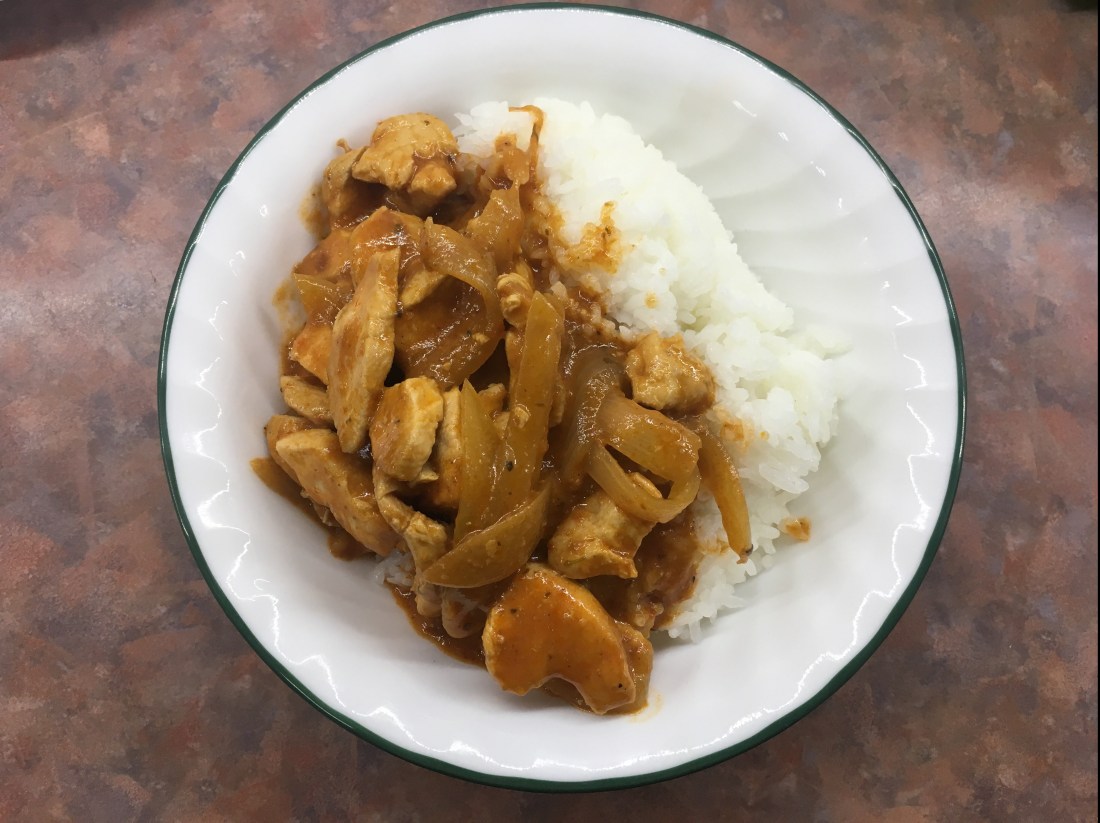
The food that I have tried today was the Spicy Butter Chicken Curry with jasmine rice. It may sound shocking but I have never tried butter chicken curry in my life. The one I tried today was from an Indian restaurant that my cousin went to and bought some for me to eat.

IMG_0564
Butter Chicken Curry that I ate yesterday for dinner.

The taste was very nice. It had the right amount of flavor. The saltiness was well balanced with the spicy and nutty flavor of the curry. There was a creamy texture to it that gave a nice wrap and coat to the tongue and mouth, including the jasmine rice. The curry also had a little bit of sweetness to it, giving a good balance between the spicy and the sweetness. The curry had a rich flavor of spices, including the taste of garam masala, chili powder and cumin.

Sight: When I first looked at the dish, it instantly reminded me of the Asian Japanese style curry that I normally eat. The thick consistency and the brown-yellow color look similar to the curry style that I normally eat. Thought the butter chicken curry had a more red color, meaning it has a little bit more heat. The sauce look very thick and the chickens look very tender and moist. The sliced onion bits seemed to have been cooked for a long time because of the tenderness and how it laid over the rice.

Smell: When I first smelled the curry, I was instantly hit with the curry spices such as chili powder and cumin. The smell of the spices were a little bit overwhelming at first but I got a very define and clear smell.

Taste: From the curry, I could taste the garam masala, the cumin and the chili powder. Thanks to the thickness of the sauce, the flavor coated the entire mouth and had a very warm feel to it. I can really taste the peppers that were put into the curry sauce. The onions were very tender and soft, giving out a sweet and salty taste. I feel like the onions gave out the sweet flavor that was needed to the spicy curry sauce. It was well balanced. The chicken was very tender and full of flavor, giving out the chicken stock flavor to the curry. It  was a little dry but the curry made up for the dryness of the chicken. The curry in  general had a good mixture of both spicy and sweetness with a warm and hot feel to the mouth.

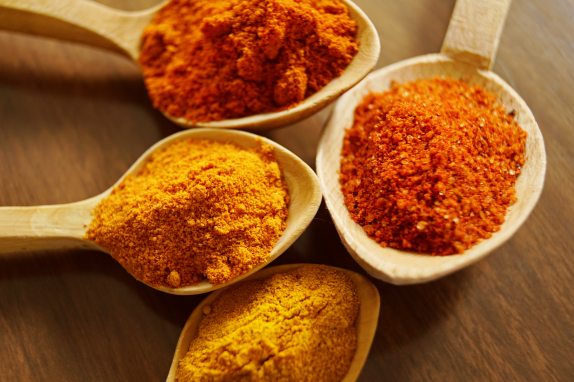
chili-chilli-powder-cinnamon-1340116.jpg
Branco, Marta: “Spices, Pexels”

Touch: When I put my fingers in the sauce to get a taste of the curry, the sauce was thick and coated my fingers. With the dripping of the sauce, it meant that the sauce had a good ratio of thickness and liquid. Of course my finger felt very hot and warm. The onions felt very tender and soft and broke down easily, whereas the chicken broke down along its original grain.

Hearing: When I was heating the curry on a pan, when it started to boil, I could hear the bubbles pop. The bubbles sounded very thick and loud, representing the thickness of the sauce.

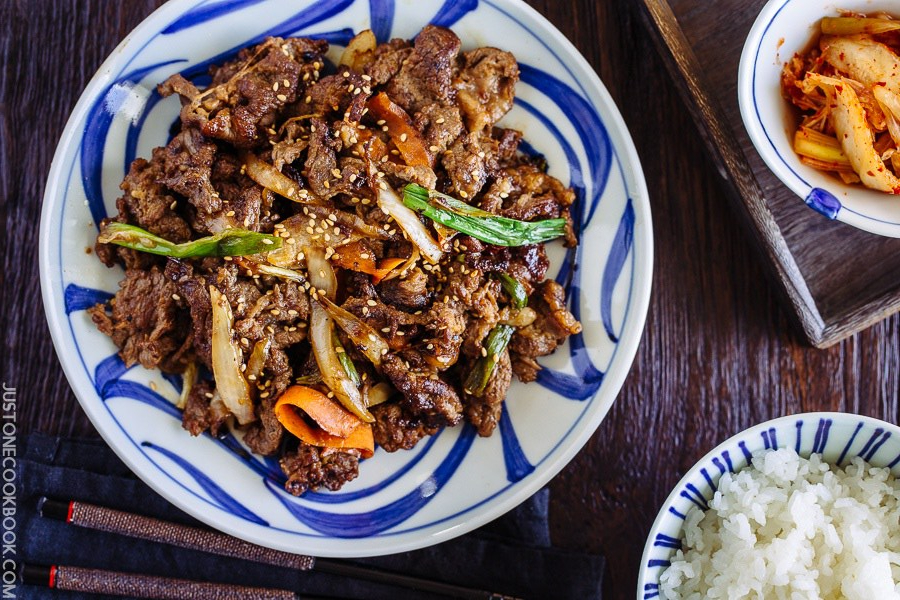
There were a few flavors to the curry that were similar to other things I have tasted. When I took my first spoon of the curry, the taste reminded me off the Japanese curry I usually eat at home. The spiciness of the curry sauce reminded me of a dish I had that also had a similar chili powder used in the curry. For some reason, the chicken and the spicy curry sauce together reminded me of a Korean dish called Buldak (spicy chicken), which is a dish that uses chicken thighs braised in a thick hot sauce. The sweetness of the onion reminded me of the onions in another Korean dish called Bulgogi (marinated beef). In Bulgogi, we cook the onions until they are tender and soft, with a little bit of caramelisation, similar to the onions in the spicy curry.

Bulgogi-II
Bulgogi, JUSTONECOOKBOOK

I feel like the spicy curry is unique because it uses spices that are only found in certain parts of the world. The spices gives the curry the unique flavor that can only be tasted in cuisines related to that dish. In most dishes from other countries, it is hard to find the flavor and sensation that you get when you eat the chicken curry. The people also have a different method of cooking it to give the curry its unique flavor and taste.

REFLECTING ON THE EXPERIENCE

Through eating this food, I realized that this dish has a totally different flavor profile from most food that I eat regularly, which is Korean food. There were many unknown tastes that were unique and surprising to my palette. I realized that my experience with different food from different culture was very limited, with most of it coming from Asia. The taste of the curry really opened up a new flavor profile for me, being able to understand the type of spices and seasoning used in the dish.

The curry was a whole new experience that I enjoyed very much. There were some flavor and taste tat were similar to dishes I normally eat, so the food was very easy to consume and pleasurable to my mouth and palette. The thick texture of the curry is very similar to other Asian cuisines I eat so it was very enjoyable. I would definitely eat it again but I would also want to explore the different cuisines related to this curry. I would like to try the variety of different curries that are available to eat and find the difference in every one of them. But so far this butter chicken curry was a success and I would eat it again anytime with a hot bowl of rice.

There wasn’t any particular flavors that I found less appealing. I thought that some of the spices such as garam masala and cumin powder would’ve bit a little weird for my taste, but surprisingly every flavor was pleasurable to my palette and I got a taste of each spices all blend together. One thing that was a little overwhelming for me was the level of spiciness.

Well now that I understand these different flavors, textures and spices used in the curry, I can incorporate these things to other dishes and idea that I have. I feel like the spices can mix well with hard broth foods from Korean dishes. This was my first time doing a sensory evaluation, meaning its the first time I had put this much concentration and detail while eating something. I feel like if I were to do this every time I eat a different dish, it would help me analyse different textures and flavors that I never thought was there previously.


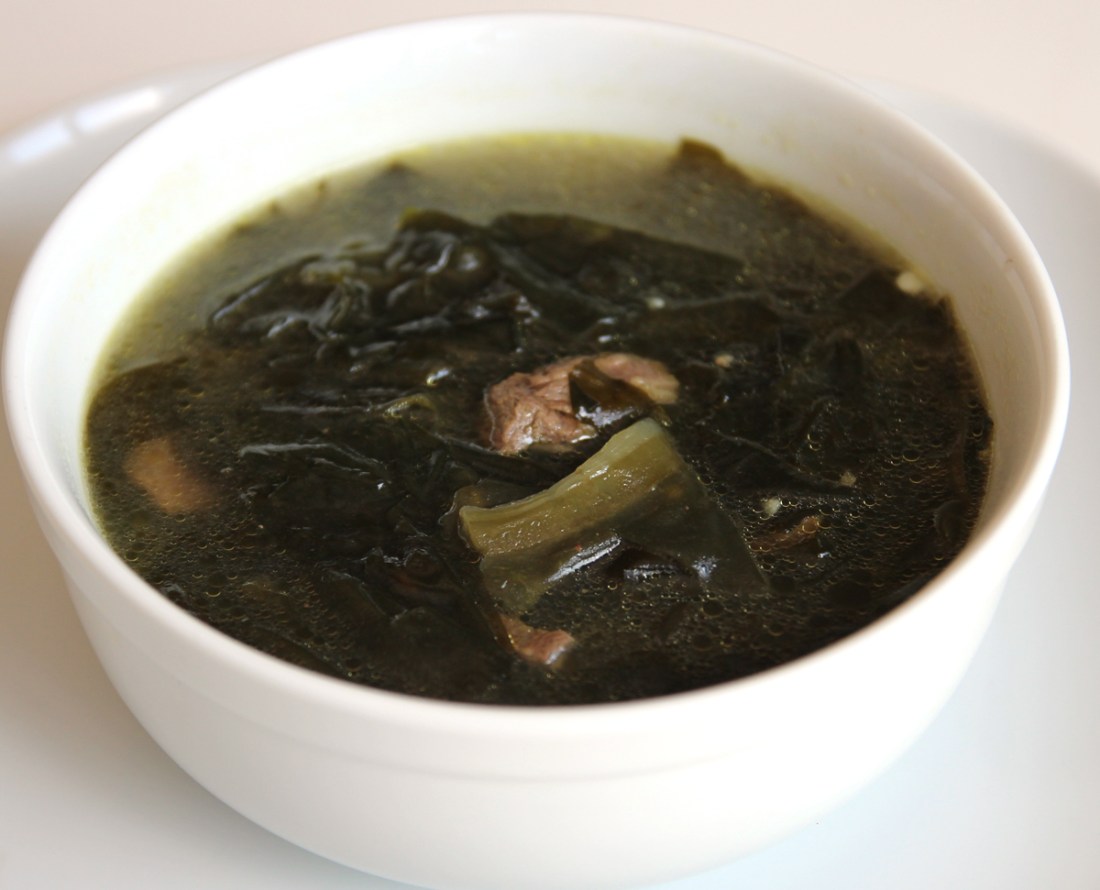
Soup: Miyeok-Guk (Seaweed Soup)

Miyeok-Guk, Image by: Maangchi

For this weeks blog, we were told to make a soup of any kind. Something that we enjoy to eat. The soup I chose was Miyeok-Guk (Seaweed Soup). Miyeok-Guk is a traditional Korean soup dish whose main ingredients are simple dry seaweed and lean meat. It is consumed on both regular and special basis. For special cases, Miyeok-Guk is traditionally consumed by women who have given birth to a child. This soup is rich in calcium and iodine, believed to be a health benefit for pregnant women. It is also consumed on a birthday breakfast, in honor for both the kid and their mother. Miyeok-Guk is usually always paired with a bowl of rice, with common side dishes like kimchi or pickled radishes.

Just like any other Korean, I eat Miyeok-Guk on a regular basis. Ever since I was young, the clean, tasty seaweed soup always had a special place within my favorite foods. It is simple, clean, light, and flavorful. The hot soup was always something to enjoy on a winter morning with rice and other side dishes.


INGREDIENTS (FOR PORTIONS OF 4)

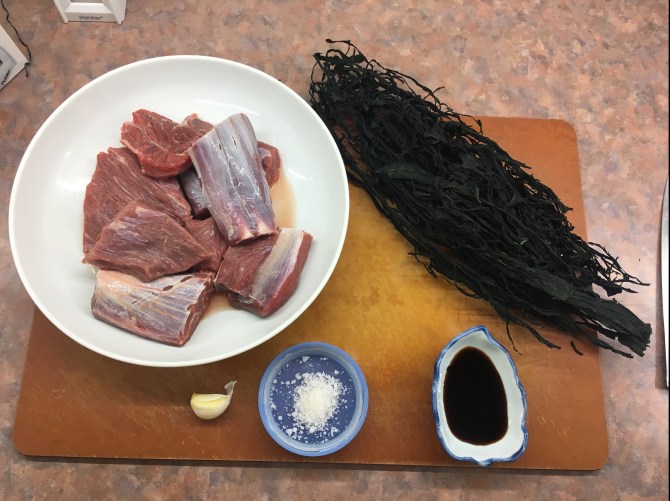
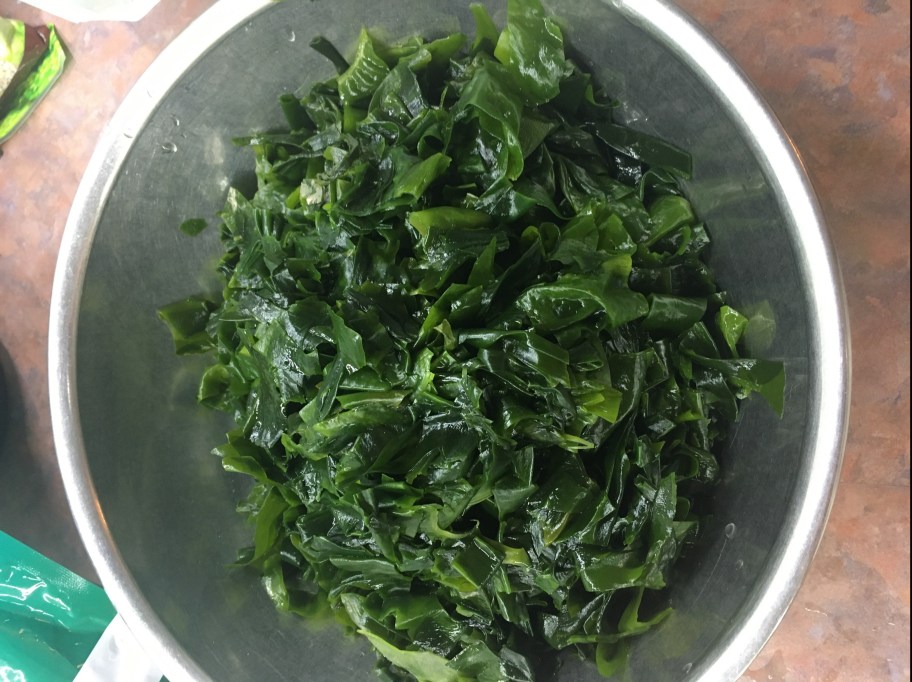
  • Dry Seaweed: 10g IMG_0536
  • Beef (Brisket & Shank): 50 g
  • Garlic: 1 tbsp, minced
  • Soy Sauce: 23 ml
  • Sesame Oil: 2 tbsp (or to preference)
  • Salt: To taste


STEPS FOR COOKING MIYEOK-GUK 

Step #1:

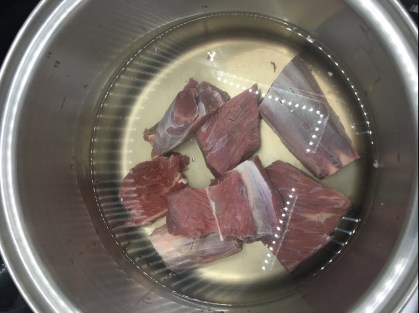
IMG_0537
Soak the beefs in a tub of water for 30 minutes to extract excess blood


Step #2:

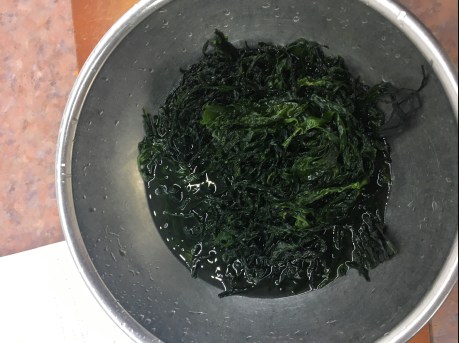
img_0538.jpg
Soak seaweed in warm/hot water for 15 mins or until soft and tender

Step #3:

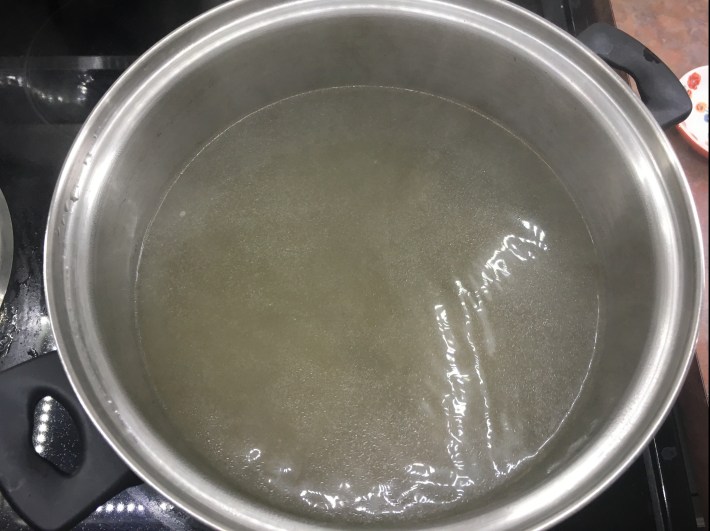
img_0539.jpg
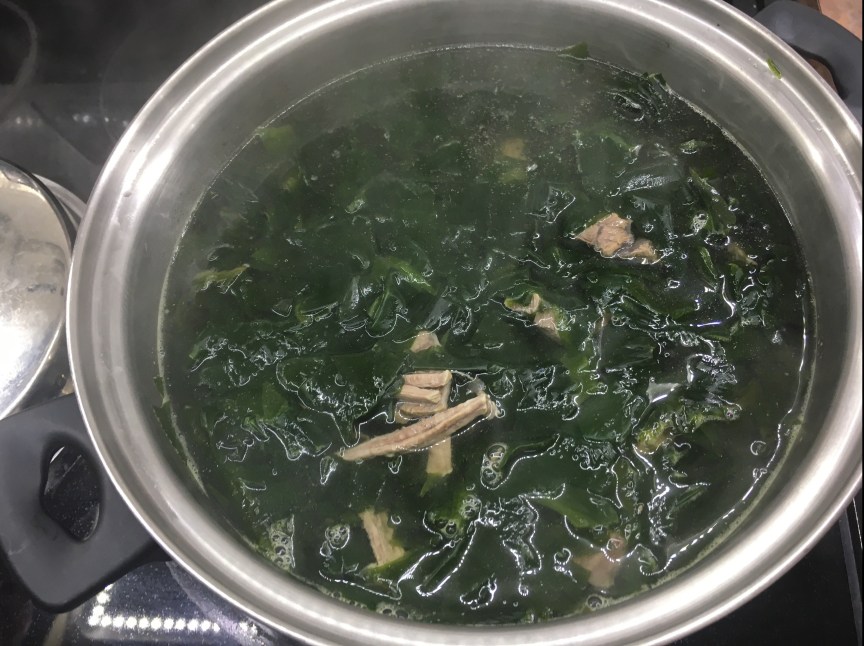
Boil beef on high heat until cooked and broth is created

Step #4: During the making of the beef broth, wash off any sand debris off of the soft, tender seaweed in cold water.

Step #5:

img_0540-e1538711354900.jpg
Drain off excess water and then cut seaweed into small bite size pieces and then set aside.

Step #6: Check on the boiling meat, If tender and soft, take out of the stockpot and let it rest. Then cut into bite size pieces.

Step #7:

img_0541.jpg
Put bite-sized seaweed into the beef broth. Add salt and soy sauce to adjust flavor and seasoning. Then boil together.

Step #8: Then add the bite-sized beef into the stockpot and then bring up to boil. Add minced garlic and bring to a simmer.

Step #9: Simmer for around 15 mins. The more you simmer the better. Add sesame oil before serving.

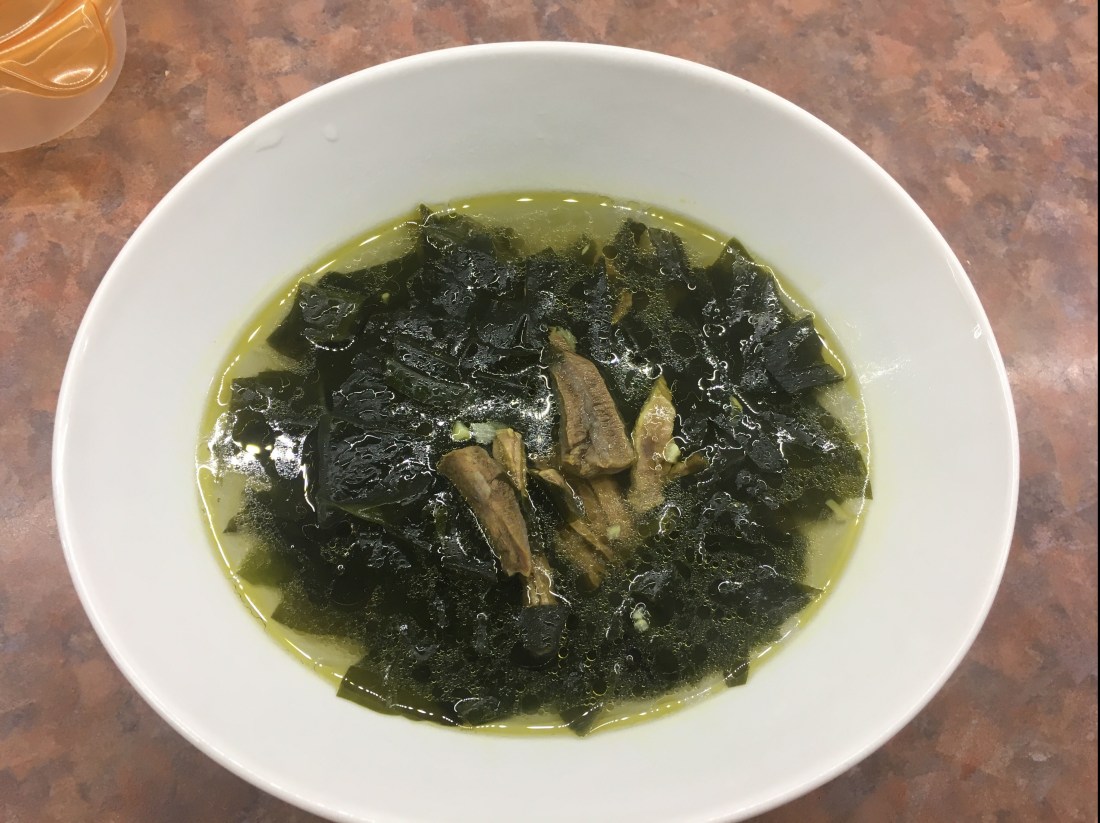
FINAL PRODUCT

img_0543.jpg


SENSORY EVALUATION

  • Taste: Deep flavor of both seaweed and beef. A hint flavor and aroma of minced garlic and sesame oil.
  • Sight: Clear broth. Dark green seaweed. Chopped browned meat. Sesame oil on top.
  • Smell: Smell of sesame oil and garlic. Smell of beef broth and dry seaweed
  • Touch: Watery and not thick.
  • Hear: Boiling and simmer off the broth.


REVIEWS FROM FAMILY MEMBERS 

I had two people try out my seaweed soup. My mother and my sister. They both had positive reviews but different opinions and problems with it.

My mother said that the flavor of the broth was not deep enough. She says the it could have been much more flavorful if I had simmered it for another 15-20 mins. She also said that both the meat and seaweed were soft and tender and that they were perfect bite sizes.

My sister said the soup needed more soy sauce and salt. She said that the seasoning was too light for her taste. She also said that a little more minced garlic and sesame oil would have been better.


DISCUSSION QUESTIONS

While making this soup, there were only a few challenges since it is a simple soup with not too many ingredients. One of the main challenges I had was boiling the beef stock and getting the beef and seaweed to the perfect temperature and texture. Another challenge I had was with seasoning the soup with the right amount of salt and soy sauce. I tend to like more seasoned food rather than the rest of my family. Therefore it was hard to maintain the right amount of seasoning that matches my family’s palette.

I personally believe it was a success. This was my first time cooking this soup without the aid of my mother. I remembered and try to do exactly what my mother did everytime she made it. I was satisfied by the texture of  both the seaweed and the beef and the seasoning of my soup. I also got good reviews from both my mother and sister so it was satisfying in the end.

If I were to make this again next time, I would do many things differently. The most important one would be to boil and simmer the soup for a longer duration of time to create a much more deeper flavor and aroma. Another thing I would change is the seasoning of the soup. I want to add more salt and a little more soy sauce.


REFLECTION ON THE EXPERIENCE

Overall making the soup gave me a deeper understanding of the dish. I used to only eat the soup that my mom prepared or only assisted her in the production. Today I did everything by myself and it helped me understand the production and every step of making this soup that I love to eat. I learned that the balance between the flavor or both beef and seaweed was crucial to making of the soup. I was able to refer back to what I learned in class and the terminology used in the culinary world back to the cooking of the seaweed soup. I realized that the steps of making Miyeok-Guk is very similar to other soups made in different parts of culture and the world.


Nutrition

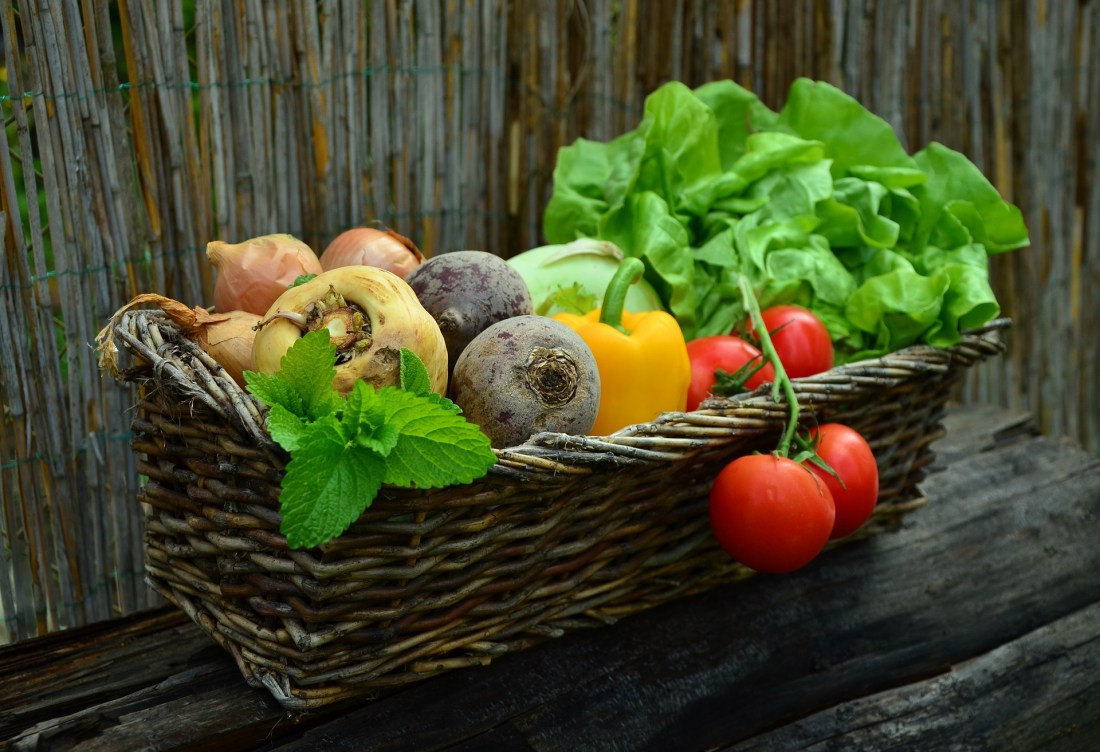
vegetables-752153_1920
Pixabay, Vegetables

A topic in nutrition that interest me are vitamins. I want to learn more about them and how it contributes to the health of the body in a more specific way, and how it can affect the body if a vast amount is consumed. I want to learn how cooks and chefs can extract vitamins and nutrients from the ingredients to the fullest so that customers can have a healthy meal. Another topic I would like to learn about in this class is fat. Fat can be a tricky thing to control when it comes to a healthy meal and dishes created in the restaurant. I want to understand the different types of fat and how they are used today in the industry.

THE IMPORTANCE OF NUTRITION IN FUTURE RESTAURANT BUSINESS

Currently, nutrition is something that is on the rising when it comes to meals served in restaurants. Many people are starting to be aware of the food that they eat outside. Customers now look at where the products come from and how they are prepped and cooked. A majority of people tend to eat outside in restaurants for every meal, so they are starting to care about the food they eat and how much nutrients they are consuming.

restaurant-690975_1920
Pixabay, Dining, Restaurant 

In the future, nutrition will play a much more important role in the kitchen then it does today. Eating meals in a restaurant has become very common and will be much more popular in the coming future. People will start going out to eat their daily meals (especially dinner) at restaurants. It is important that chefs and cooks create dishes that will not only pleasure their customers’ palette, but also benefit their heath and body. Though nutrition will play a big role in the coming future, a part of me still believes that customers will have that craving for unhealthy, delicious food, therefore it is important to balance out the menu with healthy meals but also meals that consumers want from time to time.

DIFFERENCE BETWEEN CREDIBLE AND NON-CREDIBLE WEBSITES

Credible website: https://www.dietitians.ca/Media/Media-Centre.aspx

Here we can find many important information concerning nutrients. It has everything from certified dietitians blog to news articles approved by the website (which is run by dietitians). The organisation (Dietitians of Canada) that control this website comes from the Canadian Dietetic Association. Every practice blogs posted on this website are reliable information because they were posted by certified dietitians with many years of experience.

Non-credible website: https://en.wikipedia.org/wiki/Nutrition

This website here would be a great example of a non-credible source. Wikipedia is an openly editable content, meaning anyone can erase or add information that they think fits into the certain topic. It is not reviewed by anyone from that specific genre, in this case a certified dietitian. The article does not have any authors. Information from this source is not taken as credible and there may be false information.

Chris’ Food & Cooking Blog

Name: Chris Ahn

Age:18           Nationality: Canadian Korean


About Me: I am an 18 year old culinary student who is attending George Brown College. The reason that I want to become a chef is to bring Korean food into a higher fine-dining experience. Korean food is mostly portrayed as a casual dine in or take out food for most people. My goal is to use fine dining and french techniques to create Korean food on a higher level and elevate customer’s perspective on my country’s culinary history. Ever since I was young, I grew up around Korean food everyday. The profound flavor and taste of variety of Korean food was always exciting to me.

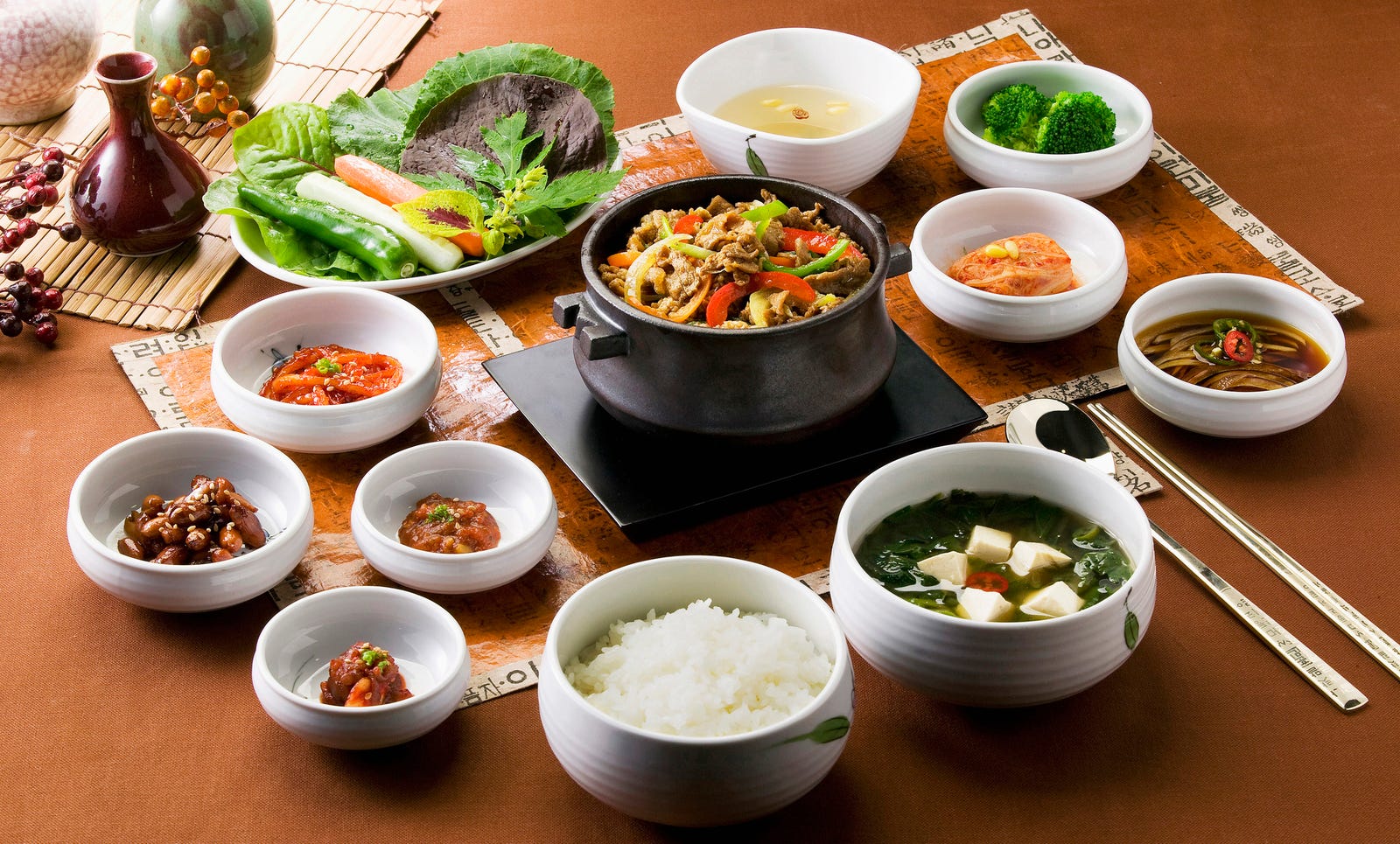
Photo of Traditional Korean Dinner (Banchan): Topic Images Inc./Getty Images

After being introduced into the idea and importance of fine-dining through the internet, I realized that this was something I wanted to do in the future. The amount of concentration and passion they put into making a dish really inspired me to become a chef. Many fine-dining chefs presents their culture’s food at a high level, the foods that they grew up on. Famous chefs like David Chang, Alex Atala and Gaggan Anand inspired me to chase my dreams of becoming a fine-dining chef who brings Korean food to a higher level of dining.

Personal Philosophy for Cooking: I believe that cooking should be all about showing your experiences as a chef but also as a person. Being able to transfer the memory of taste and experience I get during my lifetime and sharing it with others on a plate I created myself  is something very special and fulfilling. I want people to experience the highest moments I’ve had with food, especially food cooked and eaten with family and friends. I also believe that cooking is about happiness. Like what most people say, food brings everyone together and I really believe it does. Having dinner with friends and family, eating off the same table, talking and having a great time is something that I consider important.

Chef/Owner David GIlbert teaches his Kitchen team to plate with perfection and with an eye to polished details. [Photograph]. (2016, November). Marais Restaurant, Detroit In A. Levin (Author).
Food Blogs: From this blogging experience, I hope I can interact with others about what dishes they have created and get inspired from other students cooking. Being able to learn a variety of different food from different cultures seems fun and exciting. This is also my first time blogging and I hope I will be able to show others my experience and idea with food through this website by taking advice from others on how to improve my cooking and plating skills.


Inspiring Quote: ” When you acknowledge, as you must, that there is no such thing as perfect food, only the idea of it, then the real purpose of striving toward perfection becomes clear: to make people happy, that is what cooking is all about”

– Thomas Keller