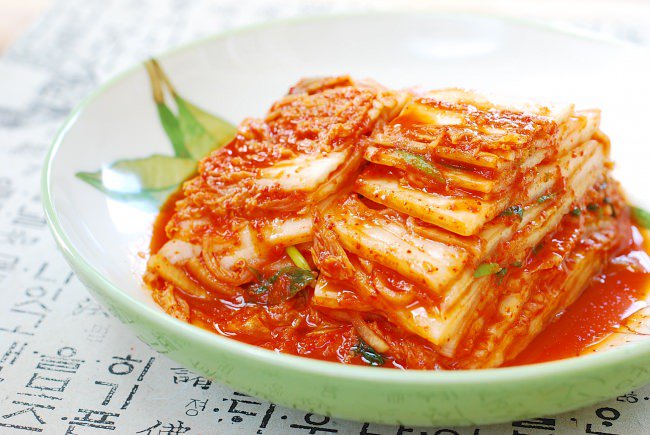
Kimchi is a staple and world famous side dish of Korea. This fermented cabbage dish is commonly consumed as a side dish to the main meal. It is a dish made of seasoned vegetables, Korean chili powder and salt and a variety of different style of kimchi exist in Korea. In the past, kimchi used to be stored underground in jars to keep cool and prevent it from rotten from warm temperature. But nowadays, with the influence of technology, people use kimchi refrigerator designated for preserving kimchi. Thanks to its long period of durability, kimchi is eaten throughout the whole year almost everyday. Kimchi is contains a high concentrations of dietary fiber and is rich in Vitamin C, Vitamin A, calcium and iron.
Kimchi is also a very versatile ingredient and it contributes to many Korean dishes. Kimchi can be used to make Kimchi Mandu (Kimchi Dumpling), Kimchi Bokkeumbap (Kimchi Fried Rice), Kimchi Jjigae (Kimchi Stew) and Kimchi Buchimgae (Kimchi Pancake).
The raw vegetable that I am using for this specific kimchi is napa cabbage and radish. It is a very simple kimchi that only contains a few ingredients and a short amount of time to make.
RECIPE
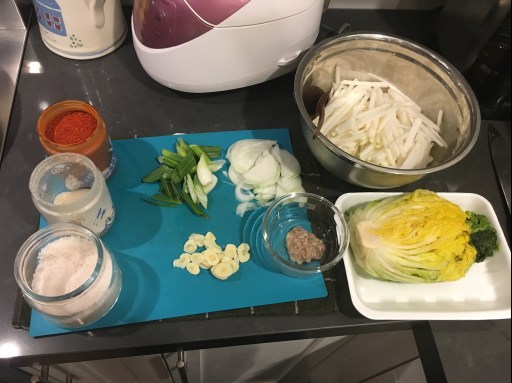
- Half of a napa cabbage
- Half a Daikon Chinese radish (thinly sliced, rough cut of julienne)
- Half of a white onion
- 2 green onions, rough cut
- 2 cloves of garlic, roughly chopped
- Pickled shrimp paste (half a tablespoon)
- Korean Dried Chili Powder (half a cup)
- Salt and sugar to taste
PROCESS
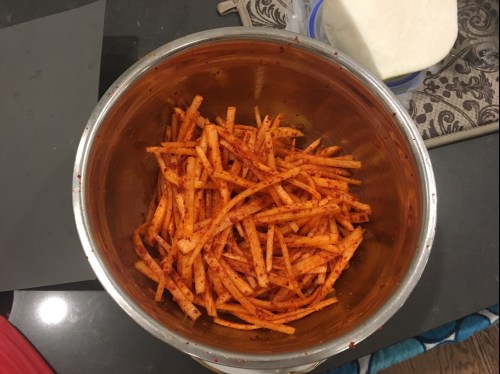
Step 1 Add Dried Chili Powder, thinly sliced radish, and salt altogether in a bowl and mix thoroughly. Set aside and rest of 10-15 mins
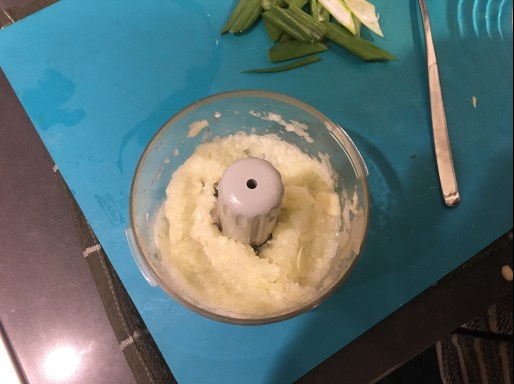
Step 2 Process garlic and onion through a mixer until it turns into a paste (2 tsp)
Step 2 Put onion and garlic paste into the salted chili pepper radishes
Step 3 Add pickled shrimp (1/2 tbsp), sliced green onions, and sugar (1/2 tbsp) into bowl and mix thoroughly and altogether
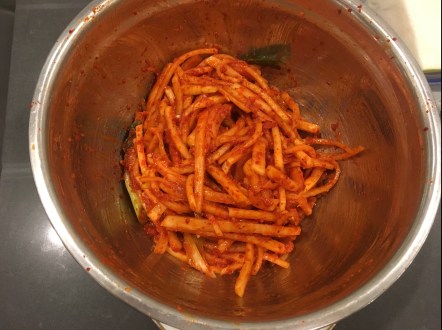
Step 4 Add the marinated radish mixture in between each layers of the cabbage until the end.
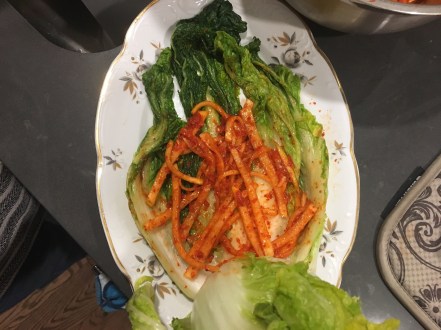
If there are any leftover of marinated radish, you can place it on top of the finished product to help the fermentation and marinating process.
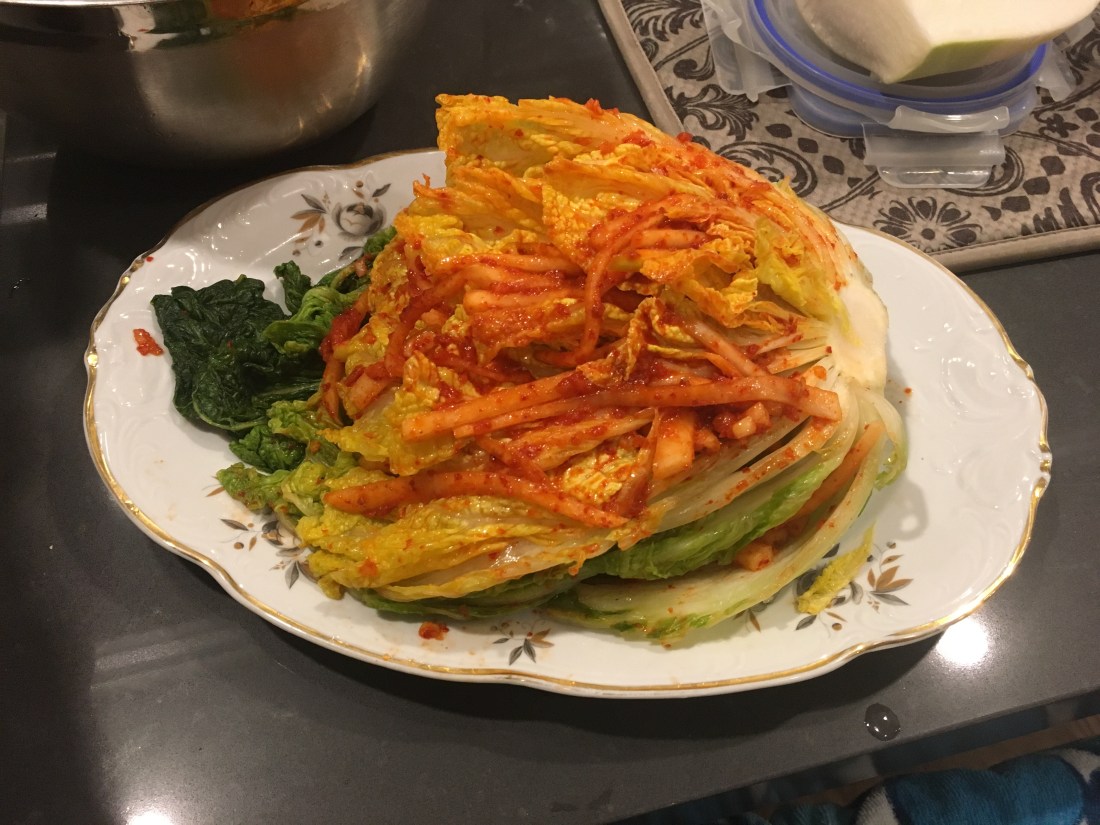
Step 5 Place the marinated napa cabbage into a container. Put a plastic wrap on top and closed the container with a lid.
Step 6 Remember to leave the marinated cabbage in room temperature for 24 hours
Step 7 Then store marinated cabbage in a refrigerator for 2-3 days before serving. The longer you store the kimchi, the more intense and acidic the flavors and kimchi become.
PERSONAL EXPERIENCE
As for marking the kimchi, it was fairly easy for me because I would always help my grand mother and mother make kimchi ever since I was young. One thing I had difficulty with was the seasoning. With all the salt coming from the salt and the pickled shrimp paste, I had to carefully measure the amount of salt content needed for half a napa cabbage. Placing the marinated radish paste in between each layers of napa cabbage was a little difficult because I wanted to store as much as possible while keeping the natural shape of the napa cabbage. Other than that, it was very simple and easy prepping the ingredients and making the kimchi
TASTING
After leaving the final product at room temperature for 24 hours, I still tasted the raw flavors of the cabbage and the marinated radish paste. The flavor of each individual ingredient was very clear and it felt clean. The paste was a little overwhelming since it the 24 hour rest. After a few days of leaving the kimchi in the refrigerator, the appearance of the kimchi was similar to the beginning and the flavor changed a little bit. The color of the cabbage was starting to turn from white to a darker shade, turning into a translucent color. The cabbage had more acidity to it and the marinade seems to start seeping into the napa cabbage.
As someone who eats kimchi on a regular basis, I know how much the flavor and color changes as it go through the fermentation and preservation process. The longer you preserve, the more intense the flavor becomes, with a little bit of a tangy taste and high acidity level. The color of the cabbage becomes more dark and translucent.

 Chris' Food Blog